History
The chuckwagon, 1866 to now
How a Texas rancher’s rebuilt army wagon fed cattle crews for months on the trail, and how its plain food became a supper you can book near Rapid City.
Pick a supper night ↗Quick answer
A chuckwagon is a horse-drawn mobile kitchen. Its invention is credited to Charles Goodnight, who in 1866 rebuilt a surplus army wagon with a chuck box of drawers, shelves and a fold-down work table so a cattle crew could be fed on the trail for months. The food was what kept: beans, salted meat, coffee and biscuits. Today chuckwagon suppers are an evening out across the old cattle country.
The rancher behind it
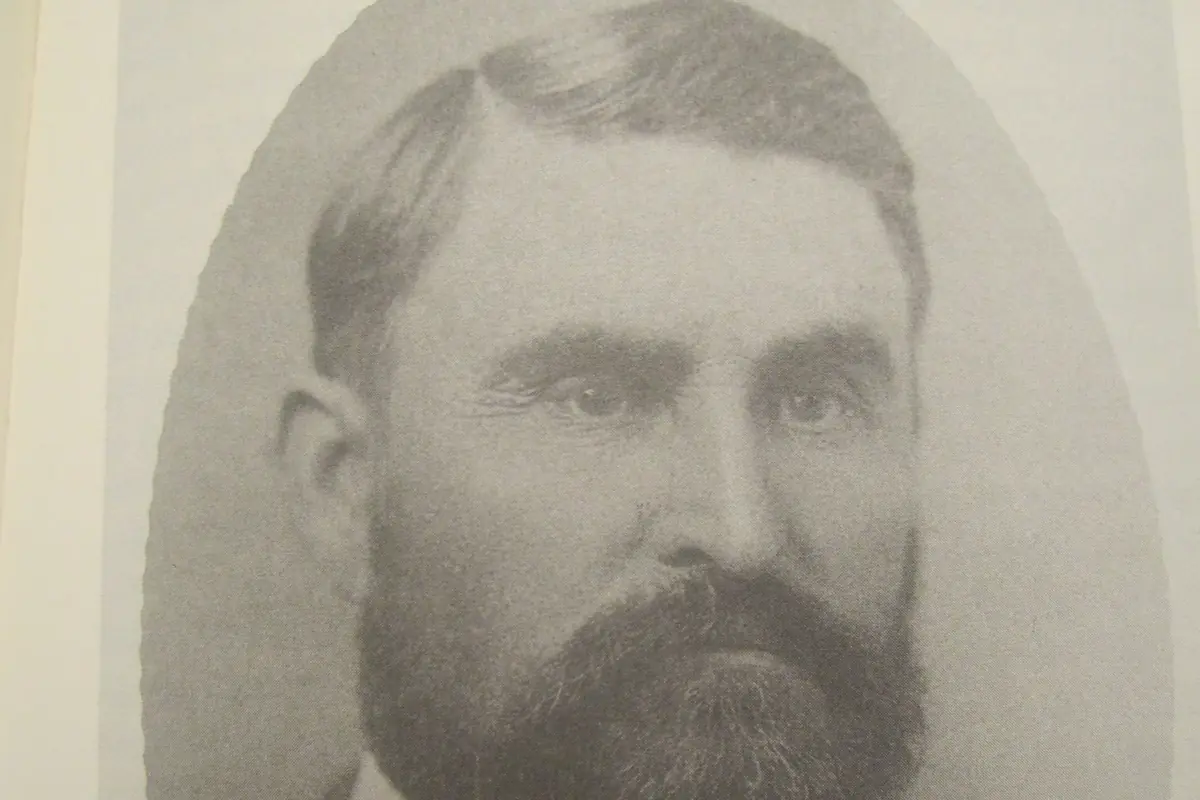
Charles Goodnight was born in Illinois in 1836 and moved to Texas as a boy. He became a cowboy, served with the Texas Rangers, and after the Civil War turned to driving cattle. In 1876 he founded the JA Ranch in the Palo Duro Canyon, the first ranch in the Texas Panhandle. He is remembered for many things, from the trail that carries his name to a herd of plains bison he helped preserve, but the invention that reaches your supper plate is the wagon.
The 1866 drive
In 1866 Goodnight and Oliver Loving drove their first herd from Fort Belknap in Texas to Fort Sumner in New Mexico, with eighteen cowpunchers and two thousand head of cattle, along what became the Goodnight–Loving Trail. The route later ran on to Denver and into Wyoming. After the Civil War the beef market grew, and some cattlemen drove herds through country with no railroads, which meant feeding a crew on the road for months at a time.
Building the first chuckwagon
Goodnight’s answer was to rebuild a sturdy army-surplus wagon made by Studebaker. On the back he fitted a chuck box: drawers and shelves for food and tools, with a hinged lid that folded down into a flat work surface. A water barrel was fixed to the side, and canvas hung underneath carried firewood. A wagon box held cooking supplies and the cowboys’ own belongings, and a boot under the chuck box held the heaviest pots, the Dutch oven among them.
The cook and the crew
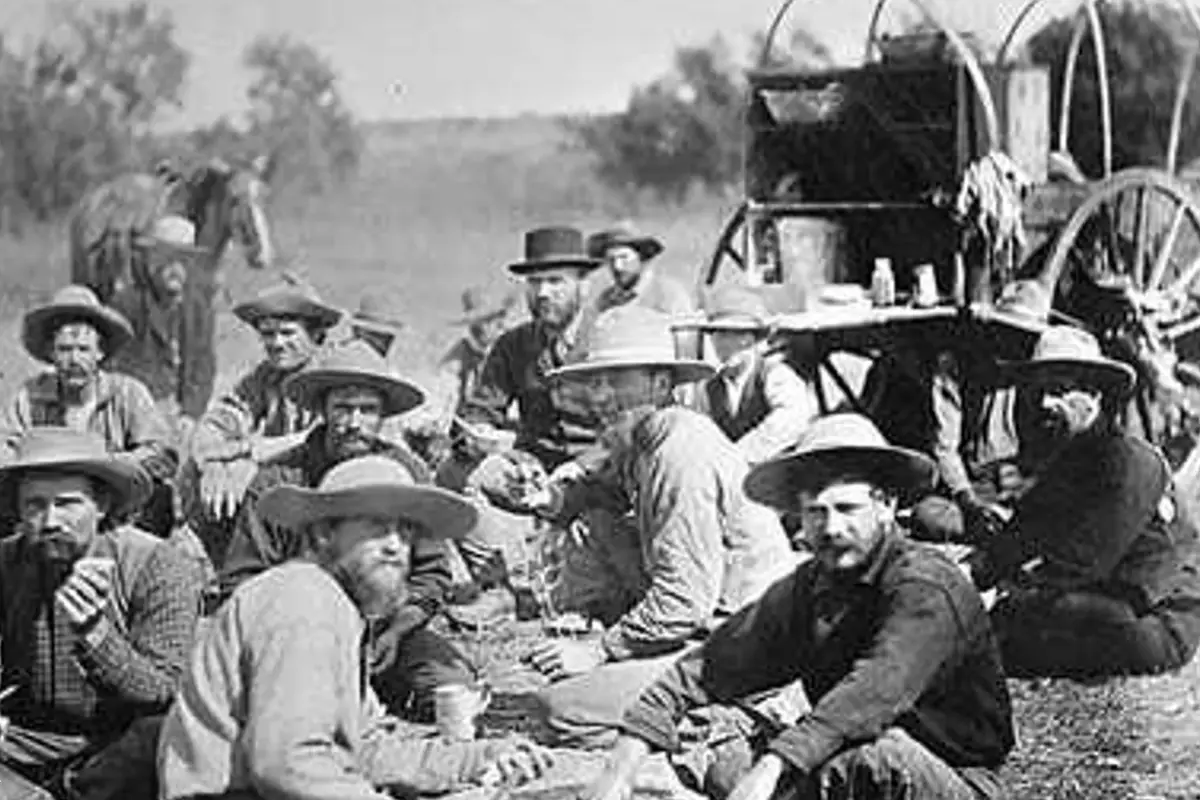
Every drive had a cook, and the cook drove the chuck wagon. On the trail the cookie was commonly second in authority only to the trail boss, and often acted as barber, dentist and banker as well. A typical outfit around him was the boss, ten to fifteen hands with several horses each, and a horse wrangler. The wagon carried the bedrolls too; tents were thought an unnecessary luxury.
Food that kept
Trail food had to survive weeks without spoiling. Chuckwagon cooking leaned on baked beans, salted meats, coffee and sourdough biscuits, with whatever could be gathered along the way. There was no fresh fruit, vegetables or eggs, and fresh meat only when an animal was hurt on the drive and had to be killed. The meats were bacon, salt pork and beef, usually dried, salted or smoked. Plain food, cooked in heavy pots over coals, was the whole point.
From the trail to the table
The long drives faded once railroads reached the ranching country, but the wagon stayed in the culture. The American Chuck Wagon Association was formed in 1997 to preserve its heritage, and teams compete in chuckwagon cook-offs around the country. Chuckwagon racing, a very different sport, has been part of the Calgary Stampede since 1923. And chuckwagon suppers are held across the old cattle ranges of the Western United States and Western Canada, which is where an evening like the one near Rapid City belongs.
Read next: Chuckwagon supper: worth it?
What that means at supper
When the bell rings at the fort, the meal follows the trail pattern in spirit rather than to the letter: potatoes, beans and biscuits with beef or chicken, cake and coffee, on tin plates. Nobody is driving cattle the next morning, and the menu is the operator’s rather than a historical recipe. But the logic is the same as Goodnight’s: hearty food for a hungry crowd, served fast and eaten together.
Sources